

Aseptic Advantages
Aseptic packaging is the future
Learn about the benefits of aseptic packaging and why it's becoming more and more popular with consumers.

How it works
Aseptic packaging starts with separately sterilizing both the product and the packaging. Once sterile, the product is filled into the package in a fully controlled environment and sealed to prevent contamination. This allows the product to stay shelf-stable for months without refrigeration or preservatives.
Unlike hot-fill and retort methods, aseptic avoids extreme heat after the product is sealed (called gentle processing), preserving flavor, texture, and nutrients while still meeting the safety and shelf-life demands of modern supply chains.
Food and beverage going aseptic
Aseptic packaging is already trusted for:

Baby food and toddler snacks

Plant-based milks and dairy products

Juices, smoothies, and teas

Soups, broths, and sauces
Nutritional drinks and medical nutrition

Health and wellness
What is it?
 Aseptic sounds like a complicated word, but it’s really quite simple—and it’s changing the way food is packaged for the better. Aseptic packaging is transforming food preservation—keeping food fresh and nutritious for longer without preservatives. Unlike older methods, aseptic packaging doesn’t need refrigeration or added chemicals to maintain food quality. Instead, it sterilizes both the food and the packaging separately, sealing in fresh taste.
Benefits of Aseptic Packaging
- Food safety & fresh taste – Kills harmful bacteria and keeps food fresh for months without preservatives.
- Better nutrition – Locks in essential vitamins and minerals. Studies show aseptic packaging retains 409% more vitamin C compared to traditional methods.1
- Sustainability – Reduces food waste by extending shelf-life. Uses nearly 50% less energy than other packaging methods. 2
- Convenience – Aseptic packaging doesn’t need refrigeration until opened, saving energy and making storage easier.
Studies from the National Center for Biotechnology Information (NCBI) confirm that aseptic processing retains higher levels of essential vitamins (C, B, and A) compared to traditional canning. 3
Compared to a glass jar, aseptic packaging produces up to 80% fewer greenhouse gas emissions and uses over 70% less energy. Even against a plastic tub, the pouch shows a 50% drop in emissions and cuts total energy use nearly in half. 2
Independent research continues to prove that aseptic processing is a breakthrough in food packaging—preserving nutrients, reducing waste, and improving food safety worldwide.
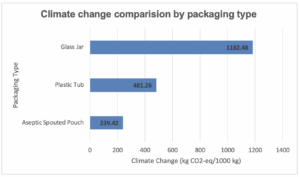
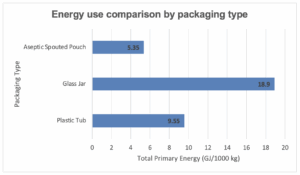
Chart data sourced from ifeu4
Benefits of aseptic packaging

Food safety & fresh taste
Kills harmful bacteria and keeps food fresh for months without preservatives.

Better nutrition
Locks in essential vitamins and minerals. Studies show aseptic packaging retains 409% more vitamin C compared to traditional methods. 1

Sustainability
Reduces food waste by extending shelf-life. Uses nearly 50% less energy than other packaging methods. 2

Convenience
Aseptic packaging doesn’t need refrigeration until opened, saving energy and making storage easier.
[1] Retention performance can vary by product and aseptic sterilization method. Product tested: mango and butternut squash puree. Third party aseptic/UHT processing at FirstWave. Retort packaging conducted at Purdue University, USA. Product quality tested conducted at Microbac, USA, 2024.
[2] Analysis of Spouted Pouches (SIG Terra RecShield Film B and SIG ClearShield Laminate with SIG Terra Amerigo fitment), = 1 a glass jar and a plastic tub on the European market (EU27+3), SavvyPack Lifecycle analysis, 2024.
[3] Dainton, A. N., Molnar, L. M., & Aldrich, C. G. (2023). Effects of container type and size on thermal processing characteristics and B-vitamin retention of canned cat food. Frontiers in veterinary science, 10, 1175819. https://doi.org/10.3389/fvets.2023.1175819
[4] ifeu = Analysis of Spouted Pouches (SIG Terra RecShield Film B and SG IClearShield Laminate with SIG Terra Amerigo fitment), = 1 a glass jar and a plastic tub on the European market (EU27+3), SavvyPack Lifecycle analysis, 2024, for Full report, click here.