A mark of trust in food
A clear, trusted mark that helps people choose food that’s healthy, safe, and made with care for the planet—backed by science, responsible packaging, and a commitment to better nutrition.
Clean Commit is more than just a label—it’s a commitment. Brands that carry the Clean Commit logo are making a promise to provide food that’s nutritious, responsibly packaged, and made with care.
Discover our promise
Clean Commit identifies products filled using advanced aseptic technology—a closed, sterile process that locks in quality from the start. No preservatives. No refrigeration. No shortcuts.
By protecting both the product and the process, aseptic packaging offers precise control over safety, product integrity, and shelf-life.
For brands, that means fewer limitations in distribution, lower waste, and a cleaner, more efficient supply chain. For consumers, it means food and drinks that stay fresher longer without compromise.
Aseptic packaging gives brands a way to deliver safe, shelf-stable products without relying on preservatives or refrigeration. By sterilizing the product and the package separately before filling, it helps preserve nutrients, extend fresh taste, and maintain product quality across the entire supply chain.
Many industry-leading brands trust aseptic packaging to deliver product to their customers in a safe and trustworthy way. Clean Commit partners show that they use aseptic packaging to deliver smarter and long-lasting products. They must meet criteria around ingredient transparency, food safety, and responsible packaging.
Learn more about the brands and why they decided to package their products aseptically.
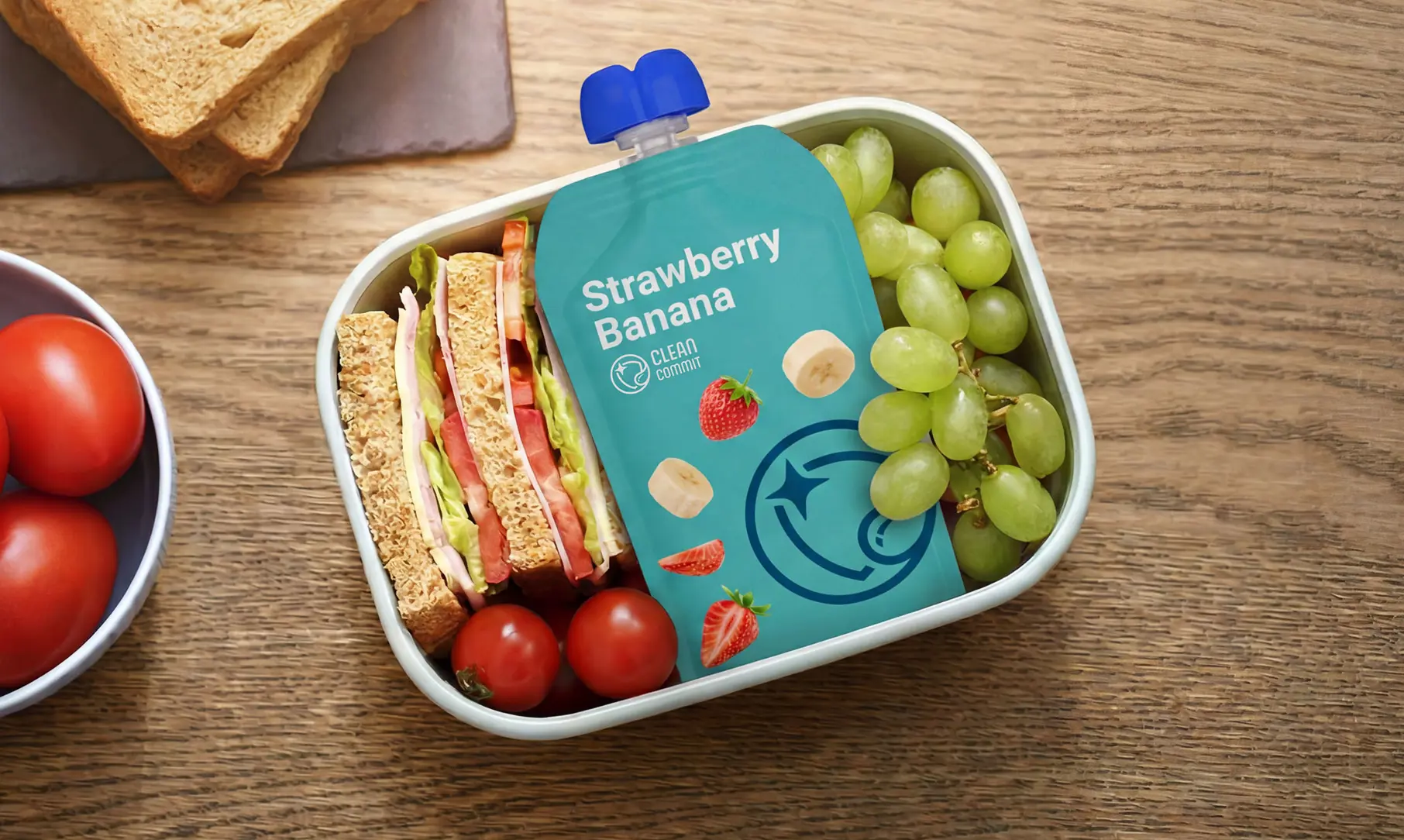
ALCA delivers the wholesome goodness of ripe bananas in convenient pouch format. Packed with essential nutrients, rich in natural flavor, and crafted to stay as close to fresh as possible.
Focused on the critical flavor window — using spice-led, veggie-forward pouches to help babies build adventurous palates from their very first bites. Developed by parents, inspired by global meals, and crafted with pediatric nutritionists, our recipes are designed to reduce picky eating, nourish tiny tastebuds, and make real flavor the new normal.
We keep your baby food simple, clean, and full of good stuff, using a gentler process that preserves natural nutrients without additives or harsh heat. Because feeding your baby should be easy, and you should feel great about every bite they take.
By locking in vitamins, smart energy use, and extending shelf-life, it helps reduce food waste while making healthy choices easier and more efficient.
Food safety & fresh taste
Kills harmful bacteria and keeps food fresh for months without preservatives.
Better nutrition
Locks in essential vitamins and minerals. Research shows aseptic processing can preserve more essential vitamins and minerals compared to traditional methods. 1
Sustainability
Reduces food waste by extending shelf-life. Pouches can use nearly 50% less energy than other packaging methods. 2
Convenience
Aseptic packaging doesn’t need refrigeration until opened, saving energy and making storage easier.
The aseptic process sterilizes both the product and the packaging before they’re sealed together in a controlled environment. Keeps what you love—great taste, texture, and essential nutrients—while lasting for months without the need for preservatives or refrigeration. Locks in the vital nutrients you care about like Vitamin C, Vitamin D, and many others.

The aseptic process sterilizes both the product and the packaging before they’re sealed together in a controlled environment. This protects what matters most—taste, texture, and nutrition1—while extending shelf-life by months without refrigeration and maintaining nutrients. It’s how brands can offer safe, long-lasting products without compromising on quality.

[1] USDA Nutrient Retention Factors, Release 6 (2007), U.S. Department of Agriculture, Agricultural Research Service
[2] ifeu = Analysis of Spouted Pouches (SIG Terra RecShield Film B and SIG ClearShield Laminate with SIG Terra Amerigo fitment), = 1 a glass jar and a plastic tub on the European market (EU27+3), SavvyPack Lifecycle analysis, 2024
[3] ResearchGate: Thermal Stability and Kinetic Study on Vitamin D3 in Fortified Canola Oil, Springer: Evaluation of Vitamin D Degradation via DSC and HPLC
[4] IntechOpen: Effect of Processing Techniques on Vitamin C of Processed Fruit and Vegetable Products, Springer: Modelling of Vitamin C Degradation during Thermal and High-Pressure Treatments, Academia.edu: Aseptic and Hot Fill Beverage Processing Study, Food Safety Institute: Impact of Food Processing on Nutrient Retention