
Aseptic technology
Aseptic technology gives brands a way to deliver safe, shelf-stable products without relying on preservatives or refrigeration.
By sterilizing both the product and the package separately before filling in a controlled environment, it helps retain nutrients, maintain fresh taste, and protect product quality throughout shelf life.
Aseptic processing minimizes heat exposure after sealing, enabling gentler processing that better protects flavor, texture, color and nutritional integrity, while fully meeting safety and shelf-life expectations of up to 12 months.
How does aseptic packaging work?
Where aseptic makes an impact
Aseptic packaging is trusted across a wide range of categories, including:
- Baby food and toddler nutrition
- Plant-based and dairy beverages
- Juices, smoothies, and teas
- Soups, sauces, and broths
- Nutritional and medical drinks
- Health and wellness products

Benefits of aseptic packaging

Food safety &
fresh taste
Kills harmful bacteria and keeps food fresh for months without preservatives.

Better nutrition
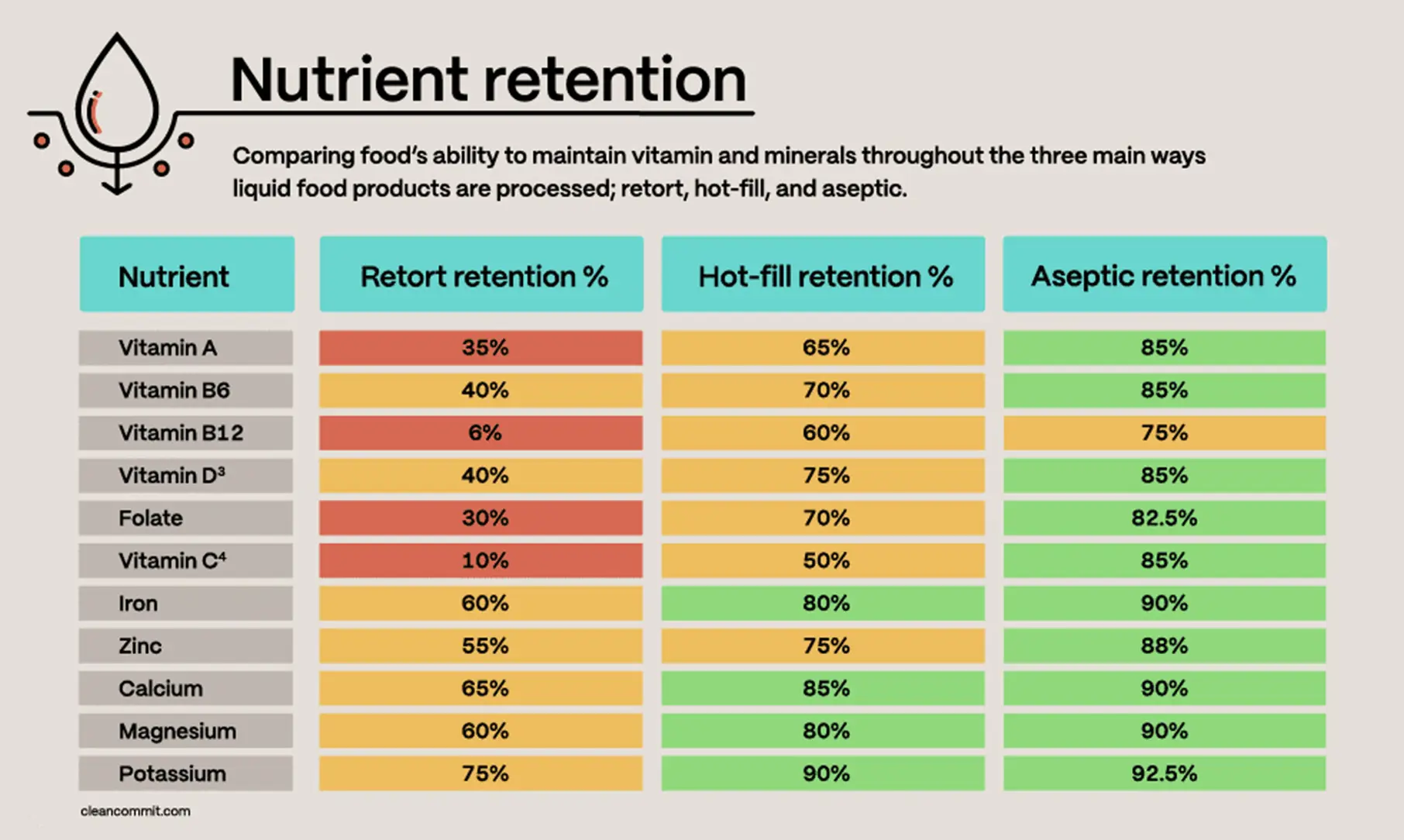
Locks in essential vitamins and minerals. Studies show aseptic packaging retains 409% more vitamin C compared to traditional methods.

Sustainability
Reduces food waste by extending shelf-life. Uses nearly 50% less energy than other packaging methods.

Convenience
Aseptic packaging doesn’t need refrigeration until opened, saving energy and making storage easier.
The aseptic process preserves essential nutrients
Independent research continues to prove that aseptic processing is a breakthrough in food packaging—preserving nutrients, reducing waste, and improving food safety worldwide.
The aseptic process sterilizes both the product and its packaging before sealing them together in a controlled environment. This preserves the taste, texture, and essential nutrients you value, while enabling a long shelf life without preservatives or refrigeration. Key nutrients like Vitamin C and Vitamin D are carefully retained.
Aseptic technology keeps food looking fresh for longer
When food is heated during processing, its color and flavor can change. Retort processing uses heat for a long time, which often causes food to lose its bright color and fresh taste.
Aseptic processing uses very high heat for just a few seconds. This quick method helps food keep its natural color and flavor much better than retort processing.

Curious about aseptic packaging in more detail?
Download the factsheet and learn more about the key benefits of aseptic packaging.
