
Aseptic Packaging
Frequently Asked Questions
Curious about aseptic packaging? Browse the FAQs below to learn more.

Why don’t aseptic products need to be refrigerated?
Since both the product and the packaging are sterilized before filling, aseptic packaging prevents contamination, and keeps products shelf-stable for months without refrigeration. The sealed environment protects against spoilage without the need for preservatives or cold storage.
What makes aseptic different from hot-fill and retort?
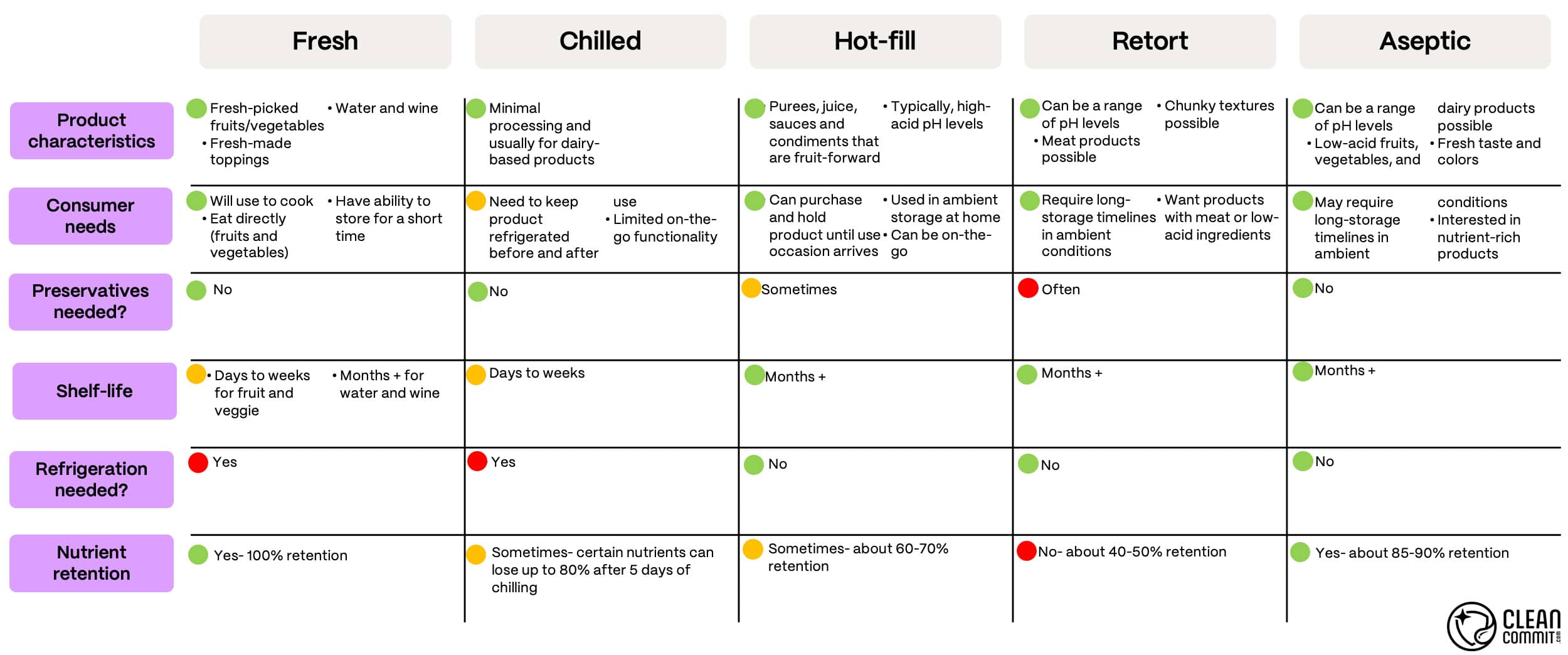
Hot-fill and retort methods use high heat after the product is sealed, which can impact flavor, texture, and nutrients. Aseptic packaging sterilizes the product and package separately, then fills in a sterile environment. This helps preserve quality while still achieving long shelf-life and food safety.
What does “aseptic packaging” mean?
Aseptic packaging is a process that keeps food safe, fresh tasting for longer, and maintain key nutrients—without preservatives. Both the food and the package are sterilized separately, then sealed in a clean environment, locking in nutrients and extending shelf-life without refrigeration.
Is aseptic packaging better for nutrition?
Yes! Aseptic processing is designed to preserve the natural nutrients and flavors of food. Compared to other methods:
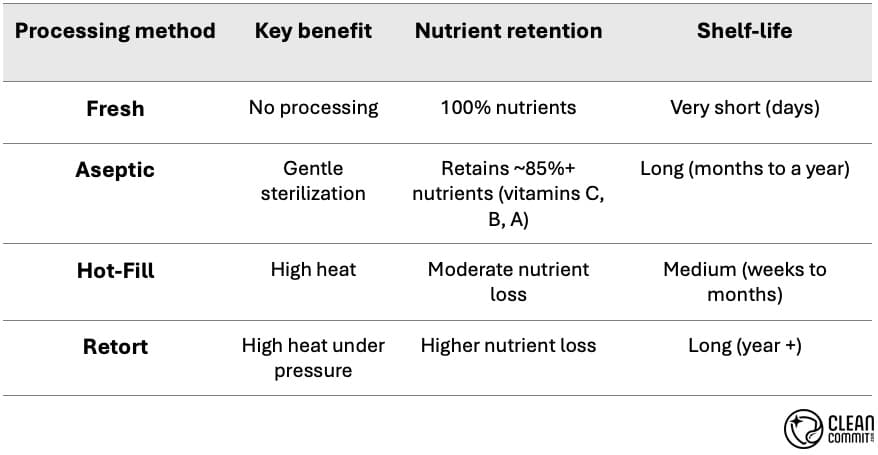
Aseptic gives you the best of both worlds: longer shelf-life without sacrificing key nutrients.
Can aseptic packaging help to reduce food waste?
Absolutely. Aseptic packaging extends shelf-life dramatically, helping food stay fresh in taste, longer, without the need for refrigeration. By reducing spoilage and the need for cold storage, aseptic packaging cuts down on waste across the entire supply chain, from the factory to your fridge.
What types of foods and beverages use aseptic packaging?
Aseptic packaging is already trusted for:
- Baby food and toddler snacks
- Plant-based milks and dairy products
- Juices, smoothies, and teas
- Soups, broths, and sauces
- Nutritional drinks and medical nutrition
How does aseptic packaging reduce environmental impact?
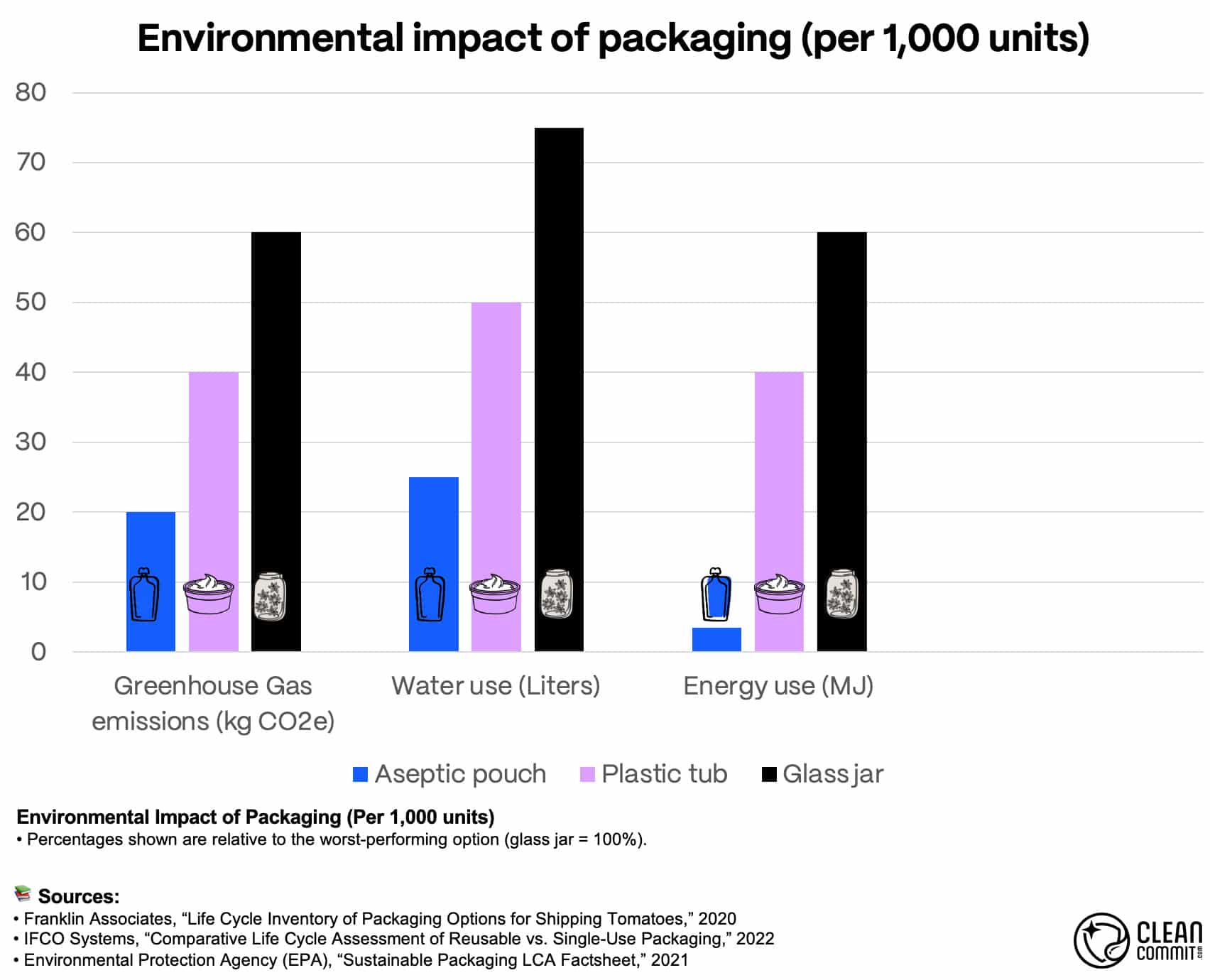
Aseptic pouches eliminate the need for cold storage during shipping and on shelves, dramatically reducing energy use and greenhouse gas emissions. According to life cycle assessments (LCAs), SIG’s aseptic pouches outperform glass jars and plastic tubs in key areas like climate change impact and total primary energy use. By choosing aseptic, brands, and consumers help reduce food waste and support a lower-carbon future. Learn more.
Is Clean Commit packaging recyclable?
Many Clean Commit products use packaging materials designed for recycling. While local recycling availability may vary, SIG’s commitment to designing for recyclability and reducing environmental impact is a core part of the Clean Commit promise. Look for recycling instructions on your favorite Clean Commit products!
How does processing impact food quality?
What is the environmental impact of different packaging types?